Introduction to Enoch Burke
The name Enoch Burke has become one of the most talked-about in Ireland’s recent legal and cultural debates. What began as a dispute inside a secondary school evolved into a high-profile courtroom saga that raised questions about religious freedom, free speech, employment law, and gender identity policies. Whether people support him or strongly disagree with him, few deny that his case has sparked a serious national conversation.
In this article, we will break down the full story of Enoch Burke, explain the background, outline the legal developments, and analyze the wider implications. This is not just about one teacher. It is about the tension between personal beliefs and institutional rules in a rapidly changing society.
Who Is Enoch Burke?
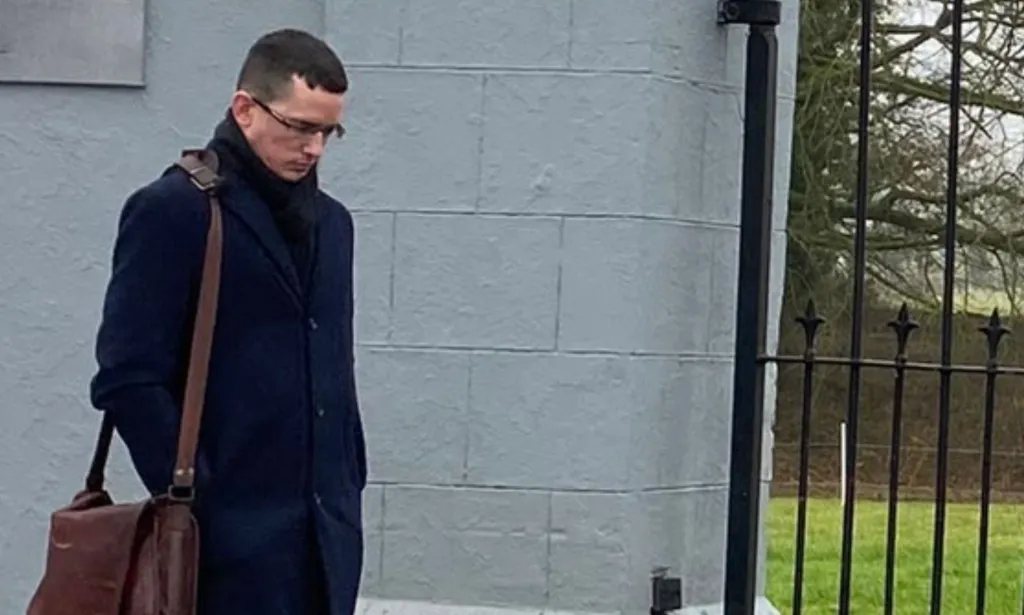
Enoch Burke is an Irish secondary school teacher from a well-known evangelical Christian family in County Mayo, Ireland. Before the controversy began, he worked as a history and German teacher at Wilson’s Hospital School, a Church of Ireland-affiliated boarding and day school in County Westmeath.
Burke comes from a family that has often been publicly outspoken about religious and social issues. His family members have been involved in various protests and court appearances in Ireland over matters concerning faith and morality. Enoch Burke This background is important because it provides context for Burke’s deeply held religious convictions, which later became central to the dispute.
By all accounts, Burke was academically qualified and had experience in teaching. However, it was not his classroom performance that brought him into the public spotlight. Instead, it was his refusal to comply with a directive related to a transgender student that triggered a chain of events no one could ignore.
Once the story became public, Burke quickly moved from being a local schoolteacher to a nationally recognized figure. His case began appearing in headlines, social media debates, and televised news discussions across Ireland and beyond.
The Incident That Sparked the Controversy
The controversy began in 2022 when Wilson’s Hospital School reportedly asked teachers to address a transgender student by a new name and use “they/them” pronouns. Burke objected to this request, stating that doing so conflicted with his Christian beliefs.
According to court records and public reporting, Burke expressed his disagreement during a school event and later through written communication. He argued that he could not, in good conscience, use pronouns that he believed contradicted his religious convictions about gender.
The school administration viewed his refusal as a breach of its policies and potentially harmful to the student involved. From the school’s perspective, respecting a student’s preferred name and pronouns was part of its duty of care and anti-bullying commitments.
This disagreement quickly escalated. The school suspended Burke with pay while investigating the matter. However, Burke did not simply accept the suspension quietly. Instead, he continued to attend the school premises, which led to further disciplinary action and legal intervention.
The Legal Battle: Court Orders and Arrests
The legal phase of the Enoch Burke case began when the school sought an injunction from the Irish High Court to prevent him from entering the premises while suspended. The High Court granted the order, directing Burke not to attend the school.
However, Burke continued to appear at the school despite the court order. This decision resulted in him being held in contempt of court. Contempt of court occurs when someone deliberately disobeys a court’s instruction.
Burke was subsequently arrested and jailed for refusing to comply with the High Court’s injunction. His imprisonment became one of the most dramatic elements of the case. Supporters framed him as a man standing up for religious freedom, while critics argued that he was defying lawful authority.
The legal proceedings stretched over months, with multiple court appearances. Each time, the core issue remained the same: Burke’s refusal to obey the court order banning him from school grounds during his suspension.
Religious Freedom vs. Institutional Policy
At the heart of the Enoch Burke case lies a fundamental question: Where should society draw the line between personal religious beliefs and professional obligations?
Burke consistently stated that he was not targeting the student personally but rather objecting to being compelled to use language that conflicted with his faith. He framed his stance as a defense of religious liberty and freedom of conscience.
On the other hand, Wilson’s Hospital School maintained that it had a legal and ethical responsibility to create an inclusive environment for all students. From its perspective, allowing a teacher to refuse to use a student’s preferred pronouns could undermine that goal.
This tension reflects a broader global debate. Many Western societies are grappling with how to balance protections for LGBTQ+ individuals with protections for religious expression. The Burke case became Ireland’s most visible example of this clash.
Public Reaction in Ireland
Public opinion on Enoch Burke has been sharply divided. Some people see him as a principled individual willing to sacrifice his freedom to defend his beliefs. They argue that he was unfairly punished for expressing a religious viewpoint.
Others believe he disrupted the school environment and disrespected a vulnerable student. Critics argue that teachers have a professional duty to follow school policies, regardless of personal beliefs.
Media coverage has also played a significant role in shaping the narrative. News outlets frequently reported on Burke’s court appearances and his family’s outspoken comments. Social media amplified both support and criticism.
The case has not remained confined to legal arguments. It has sparked emotional debates at dinner tables, in churches, and in political circles throughout Ireland.
Employment Law and Professional Conduct
Beyond religion and gender identity, the Enoch Burke case also raises important employment law questions. Employers generally have the authority to set workplace policies. Employees are expected to follow them as part of their contractual obligations.
However, employment law also recognizes certain protections for religious beliefs. The challenge lies in determining whether a policy unlawfully infringes on those beliefs or whether compliance is a reasonable requirement of the job.
In Burke’s situation, the court focused less on the underlying pronoun dispute and more on his refusal to obey a lawful court order. The judiciary emphasized that the rule of law must apply equally, regardless of personal convictions.
This distinction is crucial. While the cultural debate grabbed headlines, the immediate legal consequences stemmed from contempt of court rather than from the original pronoun disagreement alone.
The Broader Cultural Impact
The impact of the Enoch Burke controversy extends far beyond one school. It has influenced discussions in Irish politics, education policy, and religious communities.
Some policymakers have pointed to the case as evidence of the need for clearer guidelines around gender identity policies in schools. Others have called for stronger protections for freedom of conscience.
Religious groups across Ireland have referenced the case when discussing their own rights within increasingly secular institutions. Meanwhile, LGBTQ+ advocacy organizations have emphasized the importance of affirming policies to protect transgender youth.
The case also serves as a reminder that legal disputes can quickly evolve into national debates about identity, authority, and values.
Lessons From the Enoch Burke Case
Several key lessons emerge from this ongoing controversy.
First, it shows how workplace conflicts can escalate rapidly when deeply held beliefs collide with institutional rules. Clear communication and early mediation might prevent such disputes from reaching the courtroom.
Second, it highlights the importance of the rule of law. Courts operate on the principle that their orders must be respected, regardless of personal disagreement.
Third, it reveals how cultural change creates legal challenges. As societies evolve, institutions must constantly reassess how they balance competing rights and responsibilities.
Finally, Enoch Burke the case demonstrates the power of individual action to spark national conversation. Whether one agrees with Burke or not, his actions have undeniably shaped public discourse in Ireland.
Conclusion:
The story of Enoch Burke is not just about a teacher and a school. It is about how modern democracies navigate sensitive issues involving identity, belief, and authority.
The legal process continues to define the practical outcomes, but the broader debate remains ongoing. Ireland, like many countries, continues to wrestle with how to respect diversity while maintaining social cohesion.
As society changes, cases like this will likely continue to emerge. They force institutions, lawmakers, and citizens to confront difficult questions. They also remind us that the balance between personal conviction and public responsibility is rarely simple.
Enoch Burke’s case will likely be studied for years as a landmark moment in Ireland’s cultural and legal history. Whether viewed as a defense of faith or a refusal to follow professional standards, it has left a lasting imprint on the national conversation.
And that is why the name Enoch Burke continues to resonate far beyond the walls of a single school in County Westmeath.